

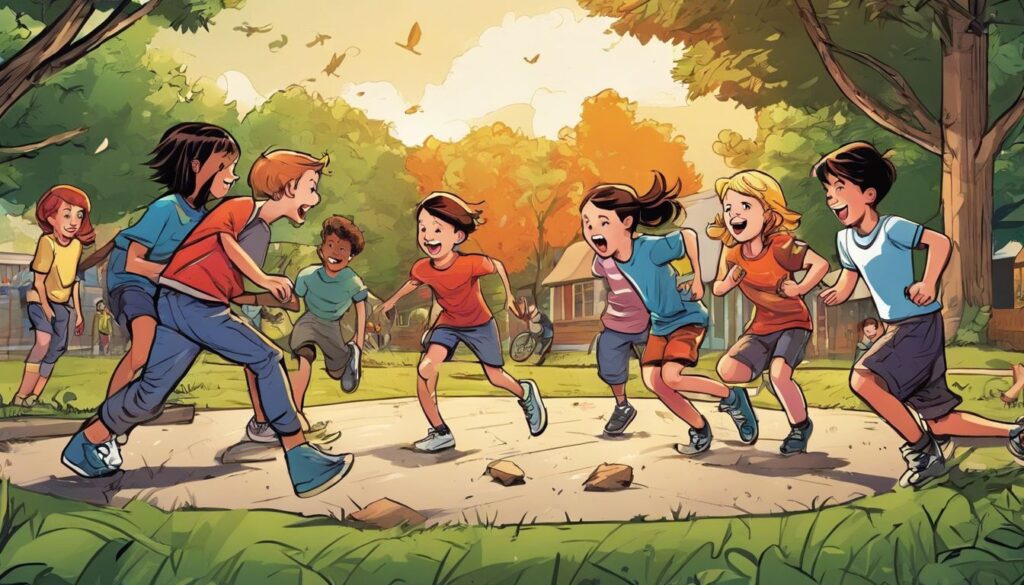
Navigating the world of increased online learning, many of us parents find ourselves confronting a familiar worry: our children’s screen time is soaring. We’re caught in this common tangle, striving to strike a balance between their educational needs and the vital doses of physical activity they require.
It’s hard not to feel concerned when we see our kids tethered to computer screens when they should be out stretching their legs and filling their lungs with fresh air.
Many of us grapple silently with that nagging sensation – are we doing enough to encourage more movement during those stretches between Zoom classes? Well, here’s a nugget of reassurance: research consistently indicates that regular physical activity isn’t just good for young bodies; it has a profound impact on brain health and cognitive function too, often leading to enhanced academic performance.
So I’ve rolled up my sleeves and delved into the nitty-gritty details surrounding this issue. Through this exploration, you’ll discover some innovative ways to weave more activity into your child’s daily routine without disrupting their studies.
This includes practical advice for teachers navigating remote learning environments as well as immediate steps you can take as parents.
Let’s commit together—let’s make sure that even within the confines of home-based learning, our children continue thriving mentally and physically. They shouldn’t have to sacrifice health for education or vice versa.
Are you ready for some engaging tips that might just get everyone in your household moving? Let’s jump right into the mix!
Key Takeaways
- Regular physical activity boosts children’s brain health and cognitive function, leading to better focus and higher academic performance.
- Creative teaching strategies can incorporate movement into online lessons, helping students stay active and engaged during their virtual classes.
- Parents play a critical role by setting up active learning spaces at home and modeling healthy lifestyle habits for their children.
- Stress from prolonged screen time in online learning can be mitigated with exercise breaks, promoting mental well-being alongside physical health.
- Combining academics with physical activity helps children manage stress effectively, laying the foundation for lifelong learning success.
The Concept of Physical Activity in Online Learning

In the realm of online learning, where screen time reigns, integrating physical activity isn’t just a nice-to-have; it’s essential for children’s cognitive growth and overall well-being.
We’re reimagining education to encompass movement as a powerful catalyst for engaged and effective learning.
Definition and Importance
Physical activity is the cornerstone of our children’s mental and physical health, especially in an era where screen time overshadows playtime. Engaging little ones in movement isn’t just about burning energy; it’s essential for developing brains and bodies.
Studies show that kids who stay active have better grades and sharper focus, something we can’t overlook with more learning happening online.
We all recognize how crucial regular exercise is to staving off childhood obesity and building lifelong healthy habits. Even during social distancing, keeping our kids moving should be a priority.
Physical activities break the monotony of being glued to computer screens, fostering not only stronger muscles but also healthier minds capable of self-regulation and metacognition – skills they need now more than ever before.
Role in Facilitating Learning
We know that our kids need more than just screen time to excel in their studies – they need to move and stay active! Studies have shown that higher fitness levels, achieved through regular physical activity, are directly connected to better grades and sharper test scores.
By incorporating short bursts of movement or movement-based tasks into the daily routine, teachers can help students break away from sedentary behaviors often associated with online education.
Let’s empower our children by integrating motion into learning whenever possible. As we encourage them to stretch between lessons or engage in physically active academic lessons, we’re not only promoting their physical health but also boosting their mental focus.
Movement primes the brain for learning readiness by increasing concentration and attention, making each online class more effective. It’s clear: a little bit of action goes a long way towards enhancing our children’s academic performance.
The Impact of the Pandemic on Physical Education

The upheaval caused by the pandemic drastically altered how children engage in physical education, with traditional gym classes giving way to screens and living room workouts. This shift highlighted the urgent need for innovative approaches to incorporate movement into the online learning paradigm, ensuring kids don’t miss out on the vital benefits of staying active.
Reduction in Physical Activities
We’ve seen the playgrounds grow quieter and the buzz of children at play slowly fade as school closures force our kids indoors. With work-from-home becoming the norm, screen time skyrockets, leaving little room for the physical activities that keep our young ones healthy and agile.
Our living rooms have turned into classrooms, and recess has become a distant memory.
Encouraging bike rides, neighborhood walks, or casual runs can be challenging amidst this new routine but think about integrating these breaks as essential parts of their day. Teachers are doing their part by weaving movement into online lessons—quick stretching sessions or short dance breaks to shake off the stillness.
Let’s take this cue to make sure that despite distance learning’s constraints, we’re keeping them moving for their mental health and motivation in academics.
The Shift to Online Learning
The shift to online learning has transformed the landscape of education, making it crucial for us to address our kids’ physical activity needs. As screens become more prevalent in their daily lives due to remote teaching, we see an uptick in sedentarism and screen time.
It’s essential for teachers and families alike to creatively integrate movement into children’s routines—whether that means incorporating stretching exercises between lessons or sharing fun family fitness challenges.
We all play a part in this new educational environment. Teachers are finding innovative ways to weave physical activities into online classwork, like using Pokémon fitness cards or creating choreographic assignments related to lesson content.
Our responsibility at home is just as critical; setting up active learning spaces and maintaining a routine that includes outdoor exercise can have profound effects on our children’s health and ability to focus during distance education sessions.
Let’s embrace these changes together and help nurture well-rounded development even through these challenging times.
The Importance of Physical Activity in Online Learning
In our digital classrooms, where screen time predominates, the role of physical activity becomes a critical counterbalance. Engaging kids in movement isn’t just playtime; it’s a vital ingredient to enhancing their focus and unlocking their academic potential.
Boosting Concentration and Attention
We all want our kids to stay sharp and engaged during online learning, but let’s face it, keeping them focused can be a battle. Mixing physical activity into their day is like hitting the refresh button on their attention span.
Research shows that active children have better brain health and cognition, setting the stage for successful learning experiences.
Let’s give our youngsters breaks to stretch, jump, or even dance—anything to get the blood pumping! These quick energy bursts do more than just shake off some restlessness; they release endorphins and increase levels of brain-derived neurotrophic factor (BDNF), which are crucial for psychological health.
This boost in BDNF not only helps with emotional regulation but also sharpens concentration and keeps those young minds ready for new information. We’re equipping them with tools for both academic achievement and happiness—a win-win scenario if there ever was one!
Promoting Mental Focus
Keeping our kids’ minds sharp during online learning requires more than just hitting the books – it demands physical activity. Exercise sends a rush of blood to their brains, carrying oxygen and vital nutrients that enhance concentration and mental acuity.
This isn’t just wishful thinking; research shows us that when children engage in regular physical activities, they’re better equipped to stay focused and absorb information during lessons.
Fostering a routine filled with movement helps release endorphins and brain-derived neurotrophic factor (BDNF), which not only fights off feelings of depression but directly contributes to the sharpening of their mental focus.
So let’s lace up those sneakers for a game of tag or create an indoor obstacle course – supporting our youngsters’ educational journey with some active fun can lead them toward peak performance in academics.
Now, shifting gears from individual focus, we’ll explore how these activities intertwine within distance education as a whole.
Enhancing Academic Performance
Every stride, jump, and game our kids play can lead directly to better grades and glowing report cards. Researchers are uncovering fascinating links between physical fitness levels and academic achievement.
We’re discovering that when our children engage in regular exercise, they’re not only building healthier bodies but also enhancing their brain health which is critical for cognitive functions like memory and attention.
Integrating physical activity into daily routines isn’t just about avoiding sedentary lifestyles—it’s a proven strategy for boosting executive function and metacognition. This means kids develop sharper minds capable of navigating complex challenges both in the classroom and beyond.
They make more positive behavior choices, manage stress effectively, and with each active break or PE session at home, they lay down stronger foundations for lifelong learning success.
Let’s lace up together to give our youngsters the edge they need!
Integrating Physical Activity into Distance Education
Integrating physical activity into distance education breathes life into the virtual classroom, providing a dynamic platform for kids to engage both mind and body. We’ve witnessed firsthand how movement can transform learning from sedentary screen time to an interactive experience that energizes and enhances educational outcomes.
Physically Active Academic Lessons
Let’s shake up the traditional classroom routines with a fresh approach to learning. We’re blending movement with mental exercise to give our kids the best of both worlds, right from our homes.
- Start lessons with a quick energizer: Kick-off academic time by having your kids do jumping jacks, dance to a song, or follow along with an online workout video. This wakes up their brains and bodies, making them more alert for learning.
- Mix desk work with movement breaks: Set a timer for every 20-30 minutes during study sessions. Encourage short bursts of physical activity like stretching, yoga poses, or marching in place to keep blood flowing.
- Create lesson-based challenges: If you’re working on math, have kids hop the number of steps that equal the answer to a problem. For spelling practice, children can do lunges while reciting each letter.
- Use active games for memory work: Play catch while reviewing facts or vocabulary. Each successful catch can represent a correctly answered question, helping to build coordination alongside cognition.
- Implement walking school buses even at home: Take reading or flashcards mobile with ‘walking school buses’ around your living room or yard where children walk and learn concurrently – it’s all about keeping active while processing information.
- Storytime stretches: Read aloud sessions are perfect opportunities for incorporating body movements that represent story elements – stretch high for tall items and crouch low for small ones in the tale.
- Dance out history and science: Turn historical events and scientific processes into choreographed routines. Kids can remember sequences better when they physically act them out like in salsa or ballroom dancing steps.
- Make use of sports as teaching tools: Utilize concepts from basketball or soccer to explain physics principles or calculate statistics, combining PE time with educational content.
- Encourage DIY fitness courses: Have your kids design obstacle courses related to their subjects. They can jump over “hurdles” made of pillows for health class or crawl under tables when solving riddles for English class.
Strategies for Teachers to Promote Active Learning
We know it’s important to keep our kids moving, especially during online learning. Teachers have the power to make physical activity an exciting part of the school day, even from a distance.
- Start each class with a quick movement game: It could be as simple as a few stretches or dance moves to wake up young bodies and minds.
- Incorporate movement into lessons: For example, during math, students could do jumping jacks while counting. This keeps energy levels high and helps information stick.
- Use active breaks between subjects: Let children take five-minute breaks to run in place or practice yoga poses, reducing restlessness for better focus on the next lesson.
- Challenge students with activity goals: Set goals like a certain number of steps per day and track progress as a class. Offer virtual high-fives as rewards for meeting them.
- Create virtual competitions: Hold weekly challenges such as who can do the most push-ups or who can create their own exercise routine. Celebrate everyone’s efforts and achievements.
- Utilize active learning platforms like GoNoodle: These resources offer short interactive videos that prompt children to get up and move right at their desks.
The Role of Parents in Promoting Physical Activity
As we navigate the online learning landscape, it’s crucial for us as parents to champion physical activity at home. It’s not just about encouraging our kids to move; it’s about modeling a dynamic lifestyle that integrates exercise into their daily routine, setting them on a path of healthy habits and improved focus in their virtual classrooms.
Encouraging Regular Exercise
We all want the best for our kids, and part of that is making sure they get enough exercise, especially during these times of online learning. A body in motion not only keeps them healthy but also sharpens their mind, ready to tackle those digital lessons. Here are some tips on how we can encourage regular exercise:
- Schedule daily workout times: Just as we pencil in online classes, let’s carve out specific slots for physical activity each day. Consistency helps build a routine that children can follow easily.
- Choose fun activities: Exercise doesn’t have to be tedious. Picking games and activities your kids love ensures they’ll look forward to moving around. Think dance-offs, family yoga sessions or backyard soccer.
- Lead by example: Kids imitate what they see us do. If we show enthusiasm for our own fitness routine, it’s contagious – our little ones are more likely to join in and stay motivated.
- Use resources like GoNoodle: For younger children, platforms designed specifically for keeping them active during screen time can be invaluable tools to help them move more.
- Encourage outdoor playtime: Whenever possible, let’s take advantage of open spaces for bike riding or walks while respecting social distancing measures.
- Set goals and reward progress: Everyone loves feeling accomplished. Setting achievable fitness goals and celebrating when they’re met can boost our kids’ confidence and enjoyment in staying active.
- Integrate exercise into learning: Teachers might add movement breaks or interactive games that get kids off their seats. We can support this by providing space at home where kids have room to jump around safely during these moments.
- Promote virtual competitions: Physical activity becomes even more engaging with a bit of friendly competition. Whether it’s through shared challenges or posting results online, this encourages children to participate actively.
Setting Up Active Learning Spaces at Home
Encouraging regular exercise creates a foundation for healthy habits, and the next step is bringing that energy into our homes. Active learning spaces at home are key to making online education dynamic and engaging for our kids. Here’s how we can transform parts of our living environment into active learning zones:
- Identify a dedicated space: Choose an area in your home that’s free from distractions and has enough room for movement. This could be a spare corner in the living room or a section of your child’s bedroom. Make sure it’s a space they can associate with focus and activity.
- Keep it well-lit: Good lighting can enhance alertness and reduce eye strain during online lessons. Natural light is best, so if possible, set up near a window.
- Invest in comfortable furniture: A comfortable chair and desk that are the right height will keep your child’s posture correct during study times. Consider adjustable options to grow with them.
- Introduce fun equipment: To encourage movement, add a small trampoline, balance ball, or yoga mat to the space. These items can be used during breaks to help kids stay active.
- Set up organizational tools: Use shelves or bins to keep school supplies within easy reach but organized. Clutter-free environments promote better concentration.
- Incorporate greenery: Adding plants can boost mood and clean the air, making for a healthier learning environment.
- Limit digital distractions: While technology is necessary for online learning, ensure non-educational gadgets are out of reach during class time.
- Create visual cues: Hang educational posters or motivational quotes to inspire learning and provide quick references as needed.
Recognizing and Addressing Stress in Online Learning Environments
Stress in online learning environments often creeps up silently but it shows itself in ways we can’t ignore. Kids might start to withdraw, complain of headaches, or even become irritable when logging on for class.
We need to spot these signs early and take action to support our children’s well-being. Creating a routine that includes regular breaks for physical activity is a powerful tool against the build-up of stress.
These moments away from the screen are not just breathers; they help reset your child’s mind and body.
We’ve found success by setting clear expectations around screen time and making sure there’s balance with offline activities. Mixing academics with light-hearted games or exercises can turn a stressful study session into an opportunity for laughter and learning.
Engaging kids in yoga stretches or dance-offs between lessons provides them ample chances to shake off any negative energy picked up during their online adventures. And transitioning smoothly from addressing stress to promoting physical wellness sets the stage for improved overall health in our next discussion – the benefits of physical activity during distance learning.
Benefits of Physical Activity During Distance Learning
Engaging in physical activity during distance learning not only enriches the educational experience for our kids but also fosters holistic development, ensuring they stay active and energized for better academic results—discover how these benefits can transform your child’s at-home learning journey.
Improved Learning Outcomes
We’ve seen time and again how physical activity goes hand in hand with improved learning outcomes for our kids. Bringing movement into their daily online lessons isn’t just about breaking up the monotony; it actively enhances academic performance.
Studies clearly show a link between regular exercise and higher grades, as well as better test scores. This is because active bodies foster more alert and engaged minds, ready to absorb new information.
Encouraging our children to move means we’re not only combating sedentary behaviors but also boosting their ability to focus and excel academically. Quality physical education programs do much more than just teach sports; they instill skills that promote lifelong physically active habits and build physical literacy.
These skills translate directly into a more productive homeschooling experience where each lesson becomes an opportunity for growth – both mentally and physically. Let’s keep integrating movement into our children’s learning routines and watch them thrive in this digital era of education!
Increased Student Satisfaction
As we introduce more physical activities into our kids’ online learning routines, we’re seeing their smiles grow wider and their enthusiasm for schoolwork soar. Engaging in quick stretches or fun movement breaks during their lessons helps to break the monotony of staring at a screen, leading them to feel happier about the time they spend learning.
Reports are flooding in from families noticing these changes; students themselves can’t stop talking about how much more they enjoy classes with a dash of active fun mixed in.
It’s not just talk, though—studies back up this rise in satisfaction. When our children move around and get their blood pumping, they tend to engage better with educational content and approach assignments with a positive mindset.
Because happiness plays such an important role in how effectively young minds absorb new information, simple tweaks that elevate moods go a long way toward enhancing the entire educational experience.
Now let’s explore how increased activity levels also boost motor skills development among students engaged in remote learning.
Enhancement of Motor Skills
We all know active kids are often more skilled at hopping, running, and playing ball. These aren’t just playful pastimes; they’re actually key moments where motor skills get a big boost.
During online learning, we can’t overlook the significance of physical activity for developing those crucial abilities. Kids need to engage in exercises and activities that challenge their coordination and agility.
Let’s encourage our children to take frequent breaks from screens to juggle a soccer ball or jump rope. Such simple activities play a huge role in enhancing fine and gross motor skills which are essential for overall health and academic success.
It doesn’t take much space or fancy equipment—just a little creativity on our part as parents can go a long way in supporting their growth outside of traditional classroom settings.
Challenges in Maintaining Physical Activity During Online Learning
Despite the clear benefits, it’s not always easy to keep kids moving in a virtual classroom environment. We’ve observed several hurdles that can disrupt or discourage physical activity when learning transitions from the playground to the screen.
Let’s delve into these challenges and explore ways to overcome them together, ensuring our children stay active and engaged no matter where their learning takes place.
Limited Physical Space
We know it’s tough to keep kids moving when space is tight. Cramped living rooms and small backyards might seem like barriers to physical activity during online learning. But let’s get creative together.
We can turn a corner of a room into an exercise nook or organize mini workout sessions between lessons. Encouragement goes a long way, so cheering on even small bursts of movement helps maintain momentum.
Facing these challenges head-on benefits our children’s health and well-being, especially with increased screen time due to remote schooling. Let’s use outdoor activities as an extension of their play area, practicing safe social distancing while riding bikes or walking the dog.
Next up: Digital Divide and Internet Access Issues – obstacles we’re ready to tackle for ensuring that our kids stay active and engaged in their learning journey.
Digital Divide and Internet Access Issues
Moving beyond the confines of limited physical space, we also face hurdles with the digital divide that significantly affect our children’s access to online learning and physical education.
These internet access issues are more than just minor inconveniences; they create a chasm in educational opportunities. Title 1 schools have reported less physical activity among students during remote learning periods compared to their non-Title 1 counterparts.
This disparity not only hinders equitable education but also impacts the overall health and wellness of our kids.
We must acknowledge that for some families, quality internet service is a luxury out of reach, putting essential PE sessions away from their child’s fingertips. Teachers strive to deliver dynamic and engaging online lessons, but without consistent and reliable internet access, maintaining regular physical activity becomes an uphill battle.
It’s not just about logging in; it’s about staying connected so students can jump, stretch, and move as needed—not just watch from the sidelines while others play on an uneven field.
Student Embarrassment and Other Barriers
We often overlook barriers like student embarrassment when we encourage our kids to stay active during online learning. Imagine trying to participate in physical education via a screen where classmates might see into your personal space.
For some students, this can be incredibly daunting and may lead them to shy away from engaging fully. Privacy concerns, along with the fear of being laughed at or judged, are just as real in a virtual setting as they are in person.
Other challenges also stand tall on our path. Limited space at home can make it tough for children to move freely without knocking over a lamp or bumping into furniture. Additionally, not all families have access to parks or outdoor areas where their kids can run and play safely.
These obstacles demand creative solutions and support from us so that every child has the chance to benefit from physical activity’s positive effects on learning and well-being. Moving forward, let’s explore how we intertwine physical activity with distance education effectively.
Case Study: The Impact of Physical Activity on Learning During COVID-19
In our deep dive into the nexus of physical activity and learning during the COVID-19 pandemic, we’ll examine a compelling case study that sheds light on how movement can influence educational outcomes.
This research offers insightful revelations about kinesthetic engagement’s role in children’s cognitive development amidst unprecedented times of virtual classrooms.
The Study Background
Our journey into understanding the importance of physical activity for kids during online learning began as we noticed changes in their daily routines caused by the COVID-19 pandemic.
Schools closed, and children were suddenly spending much more time indoors, often glued to screens for both learning and leisure. This shift sparked concerns about increased sedentary behavior coupled with a decrease in opportunities for physical education.
To tackle these challenges head-on, we initiated a study focused on the impact that incorporating physical activity into distance learning could have on children’s well-being and educational outcomes.
We knew from research that keeping active plays a critical role not only in physical health but also in cognitive functions and mental health. Endorphins released during exercise improve mood while higher fitness levels often translate to better academic performance.
Recognizing this link prompted us to explore how strategic movement breaks might boost concentration, enhance executive functions like working memory and cognitive flexibility, and counteract social isolation felt by many adolescents during this unprecedented time.
Methods Used
To explore the impact of physical activity on learning during COVID-19, researchers designed a comprehensive study. They gathered qualitative data from various focus groups, which included educators and parents like us who witnessed firsthand the shift to online learning.
The research team analyzed children’s behavior before and after incorporating movement into their daily routine, using sensorimotor assessments that reflect coordination and balance.
Investigators also relied on quantitative measures such as body mass index (BMI) to understand changes in physical health. This methodical approach allowed researchers to correlate academic performance with levels of physical activity, adhering strictly to guidelines set by centers for disease control and prevention concerning ethical standards and validity.
Moving forward, let’s delve into the results these methods unveiled.
Results and Discussions
Our examination of the case study revealed something fantastic: kids who get regular physical activity during their online learning sessions perform better academically. This isn’t just about getting higher grades; we’re talking about significant improvements in concentration, mental focus, and overall brain health which are crucial for cognition.
These findings support what many fitness experts have stressed – keeping our children moving is essential even when they’re learning remotely.
Discussing our observations with fellow parents illuminated how incorporating short bursts of movement can transform a typical online class. Think jumping jacks between math problems or a quick dance party after a reading assignment.
Not only does this make learning more fun, but it also leads to happier, healthier kids who are eager to engage in their lessons. Let’s take these insights and champion active lifestyles for our future leaders right at home!
Conclusion
We’ve seen how essential movement is for kids, even when they’re learning from their screens. Engaging in regular physical activity can truly transform their online education experience.
Encouraging our youngsters to get up and move not only sharpens their minds but also keeps their bodies healthy. Let’s champion active breaks and spirited playtime as cornerstones of our children’s daily routines.
Together, we make the virtual classroom a space where both minds and muscles grow strong.
If you’re concerned about recognizing and managing stress in younger learners, be sure to read our guide on identifying stress signs in preschoolers.
FAQs
1. Why is physical education important in online learning for kids?
Physical activity is crucial in online learning because it helps manage stress, improve attitude and behavior, and prevent summer learning loss by keeping kids active even while they learn from home.
2. Can exercise help children with learning disabilities who are studying online?
Yes, engaging in regular physical activities can assist kids with learning disabilities by improving their focus, response rate to educational tasks, and overall well-being during adolescence.
3. How does a lack of movement affect children who are working remotely for school?
Children who don’t get enough physical activity can become obese or face socio-economic challenges impacting their health and academic performance as active transportation like walking or biking to school is reduced.
4. What role does socioeconomic status play in access to PE during remote schooling?
Socioeconomic status may influence the resources available for PE; providing equitable virtual PE programs ensures all students have the opportunity to participate regardless of their background or situation.
5. How can educators incorporate physical activity into an online curriculum?
Educators can design collaborative exercises that require minimal space and equipment, ensuring compliance with section 508 accessibility standards so that every student has the chance to stay active while learning at home.